
You Can’t Copyright a Boyfriend: The Idea-Expression Dichotomy in Recent Cases
In copyright law, few doctrines are as fundamental or misunderstood as the idea-expression dichotomy. This doctrinal distinction is foundational to copyrightability and infringement analysis and may serve as an invisible barrier between permissive inspiration and legal liability. While courts have provided insights and clarifications over the decades, it remains a notoriously difficult concept to define with exact precision given its fact-intensive and specific applications.
Two recent decisions in cases on opposite sides of the nation—StudioFest LLC v. William Morris Endeavor Entertainment, LLC, and Freeman v. Deebs-Elkenaney—illustrate how this doctrine continues to evolve and apply in modern creative industries. The decisions reaffirm, in their own ways, a core principle of copyright law vital to any storyteller: copyright protects how a story is told, not that a story is told.
Doctrines & Dragons
The idea-expression dichotomy is, at its core, the legal doctrine that limits the scope of copyright protection to the creative expression of an idea but does not extend that protection to the underlying idea itself. This principle is codified in the 1976 Copyright Act,[1] but even prior to codification courts had developed and implemented the doctrine for decades. In Baker v. Selden, for example, the Supreme Court held that the author of a book describing a system of bookkeeping may claim copyright in the expressive descriptions of that system but could not claim exclusive ownership over the system itself.[2]
For another example, a “fire-breathing red dragon” is an idea, unprotectable under copyright and ownable by no one. However, specific expressions of that idea may be subject to copyright protection, as demonstrated below.
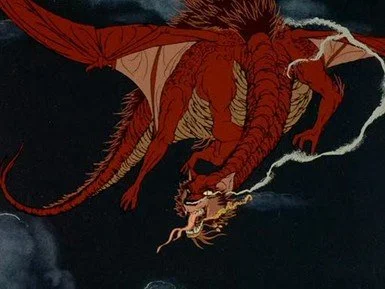

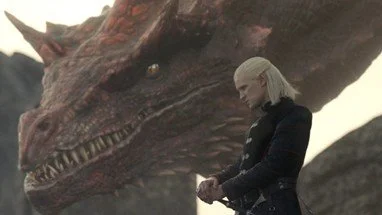
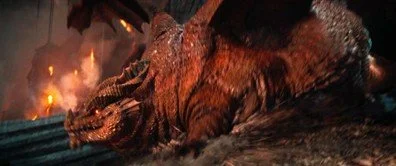
Each of the above are examples of a “fire-breathing red dragon” from across various media, demonstrating that a single unprotectable idea may be expressed in multiple protectable ways. In order, we have (1) Smaug from The Hobbit and its adaptations; (2) Charizard from the Pokémon video game franchise; (3) Caraxes from HBO’s House of the Dragon series; and (4) Themberchaud, the wonderfully chubby red dragon depicted in the film Dungeons & Dragons: Honor Among Thieves.
Since the Supreme Court’s decision in Selden, courts have continued to refine and elaborate on the doctrine through other related concepts. Such concepts include scènes à faire (literally, “scene to be made”), the principle where certain elements of a creative work are considered so customary or mandatory to a given genre that they are not protected by copyright; and the merger doctrine, where an idea can only be expressed in a limited number of ways and so those limited expressions effectively merge with the idea, becoming unprotectable.
Additionally, in practice courts will look to the substantial similarity of protectable expression to determine whether one work infringes another, though different courts apply different tests to conduct this analysis. It’s also important to note that while the general rule is that ideas are not subject to independent copyright protections, the selection, coordination, and arrangement of otherwise unprotectable elements may still be entitled to protection, especially, for example, where the copyrighted work’s overall “look and feel” is copied.[3]
Bringing it all Together
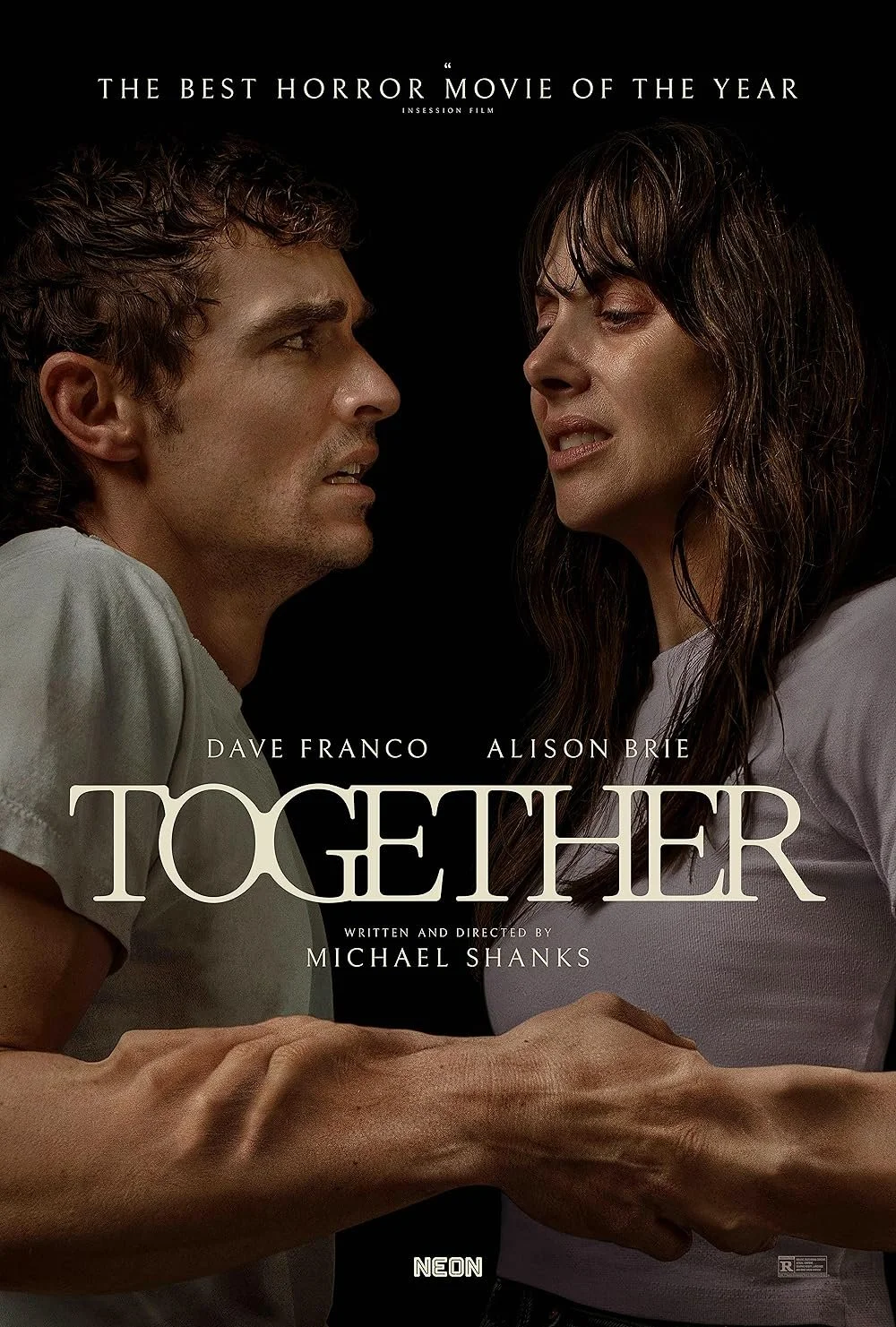
On February 20, 2026, a Central District of California judge denied defendant agency, actors, and related parties’ motion to dismiss the plaintiff production and distribution company’s claim of copyright infringement in Studiofest LLC v. William Morris Endeavor Entm’t, LLC et al.[4] In denying the motion, the court held that the plaintiff company had plausibly alleged “substantial similarities” between its screenplay, Better Half,[5] and the defendants’ film Together. Both stories center on a couple who become physically fused together as a metaphor for romantic codependency.
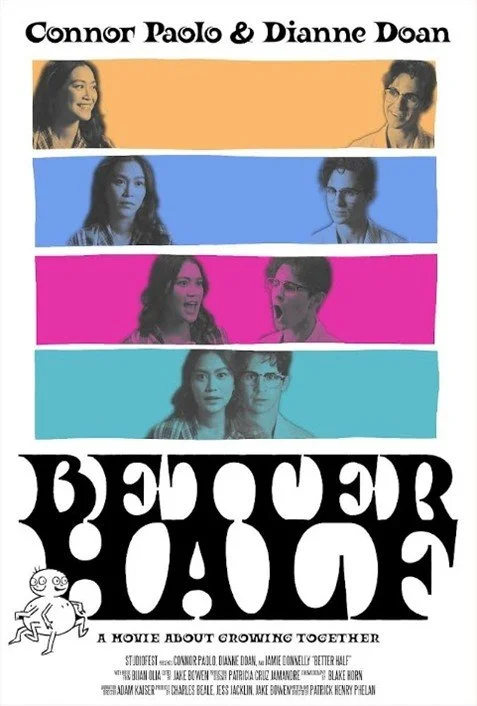
Better Half is a romantic comedy that tells the story of two single individuals—community college professor Art and tattoo artist Daphne—who meet at a local bar and end up going home to spend the night together. In the morning, they awaken to find they are attached by a growth of skin connecting them at the navel. Comedic hijinks ensue, but Art and Daphne eventually manage to come to terms with their codependency issues and become re-separated in a happy ending.
Together is a supernatural body horror movie that tells the story of a codependent couple, Millie (played by Allison Brie) and Tim (played by Dave Franco), who fall into a cave while hiking and drink from a (as it turns out, deeply cursed) pool of water. They sleep in the cave and wake up to find their legs connected by a thin layer of flesh. Horrific hijinks ensue, with the curse constantly drawing them together to physically fuse them. Despite efforts to stay physically separated, by the end of the movie their bodies have fully conjoined into a single androgynous “merged” being.
StudioFest filed a copyright infringement lawsuit against Franco, Brie, their agents at William Morris Endeavor Entertainment, LLC (WMEE), and other related defendants, alleging that WMEE copied the Better Half screenplay in creating Together. StudioFest’s casting director had previously extended offers to Franco and Brie through WMEE, including sending a full copy of the Better Half script for review. However, Franco’s agent notified the casting director that he was passing on the project. Because StudioFest had previously pitched the screenplay to WMEE and Franco, the defendants ostensibly had access to StudioFest’s work. The defendants filed a motion to dismiss, arguing that there was no alleged copying of any protectable expression.
The court denied the defendants’ motion to dismiss, allowing the case to proceed. In the Ninth Circuit, substantial similarity analysis involves application of the extrinsic test (“filtering out” unprotectable expression to conduct an objective comparison of protectable expressive elements) and the intrinsic test (a subjective impression of similarity from the viewpoint of an ordinary observer).[6] In applying the extrinsic test, filtering out unprotectable ideas and focusing only on remaining protectable expression, the court identified numerous similarities beyond the core concept of codependent individuals physically merging at the heart of both stories. Notably:
Both stories used Plato’s Symposium (which involves the story of humankind’s origins as conjoined beings that were split by Zeus out of fear and now spend their lives searching for their other half) as a narrative and metaphorical device.
Both stories include recurring references to the Spice Girls’ song “2 Become 1.”
Both stories include parallel scenes including attempts to medically or mechanically separate the fused couples and scenes where the couples attempt to conceal their conditions while hiding in a bathroom.
While the idea of individuals becoming physically fused as a metaphor for romantic codependency is unprotectable under copyright, the court determined that the alleged copying in the expression of that idea plausibly constitutes copyright infringement. This underscores a critical point of the idea-expression dichotomy: two works may share a premise without issue, but copying specific creative choices (e.g., structure, motifs, dialogue, sequences, etc.) or selections and arrangements of otherwise unprotectable elements, risks crossing the line into infringement.
About a (Supernatural) Boy
A few weeks later, on March 16, 2026, a Southern District of New York judge granted defendant author, literary agent, publishing company, and related parties’ motion to dismiss the plaintiff author’s claims of copyright infringement, fraud, breach of contract, and other related claims in Freeman v. Deebs-Elkenaney et al.[7] In granting the motion, the court held that no reasonable trier of fact could find that the unpublished “Blue Moon Rising” works and the bestselling Crave series of novels were substantially similar as a matter of law. While both stories are young adult paranormal romance (“romantasy”) tales centering on a young woman and set in a modern fantasy world, any such similarities are considered unprotectable ideas, scènes à faire, or otherwise scattered, trivial details.
Plaintiff Lynne Freeman is the author of “Blue Moon Rising” (or “Masqued”), an unpublished set of six draft romantasy novels and related notes that tells the story of a public high school girl in Anchorage, Alaska, who is secretly a “thrice born daughter” (part witch, part shapeshifter, and part demon). The young heroine and her mixed paranormal heritage are the key to the resolution of an ancient conflict between the powers of Shadow and Light, but she must also navigate her own romantic feelings involving sexy supernatural boys including shapeshifters and vampires. Freeman was party to an agency agreement with Prospect Agency between 2010 and 2014 to try and have Blue Moon Rising published, and as part of that agreement Prospect sent at least one version of Freeman’s drafts to Entangled Publishing, LLC. After Freeman and the agency were unable to secure a publishing deal, however, the agreement expired.
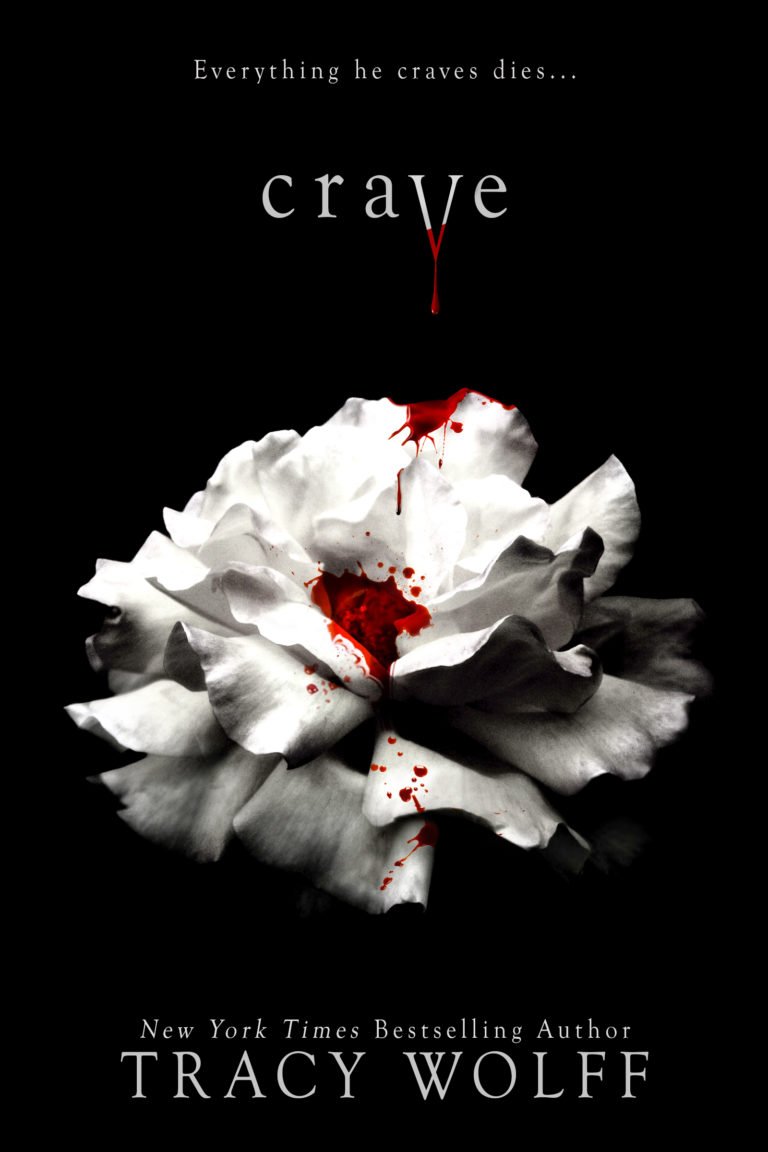
Defendant Tracy Deebs-Elkenaney (pen name “Tracy Wolff”) is the bestselling author of a young adult romantasy series, beginning with the novel Crave, that tells the story of an elite boarding school girl in Alaska who is secretly a gargoyle. Gargoyles like the young heroine were created to maintain the balance between the forces of order and chaos, but she must also navigate her own romantic feelings involving sexy supernatural boys including werewolves and vampires. Crave was a major commercial success and has since grown into a six-novel series.[8] Prospect Agency has served as Wolff’s literary agent since 2007, and Entangled published each of the six Crave novels.
Freeman filed a copyright infringement lawsuit against Wolff, Prospect, Entangled, and other related defendants, alleging that Wolff copied Blue Moon Rising in creating Crave. Because Prospect had pitched one of the early Blue Moon Rising drafts to Entangled, the defendants ostensibly had access to Freeman’s work. The defendants filed a motion to dismiss, arguing that there was no alleged copying of any protectable expression.
To assess substantial similarity in literary works containing both protectable and unprotectable elements, the court applied the Second Circuit’s “more discerning ordinary observer test.” This test requires comparing the works’ “total concept and feel, theme, characters, plot, sequence, pace, and setting,” while recognizing that copyright protection does not extend to ideas, tropes, or scènes à faire. Furthermore, ordinary words, short phrases, and scattered, random similarities cannot support a finding of substantial similarity.
After reading all of the approximately 6000 pages of romantasy fiction at issue,[9] the court found that the broad thematic overlaps—including a displaced teenage girl moving to Alaska, a high school setting filled with hidden supernatural creatures, and a steamy romance with a monstrous love interest—are unprotectable tropes and scènes à faire standard to the young adult “romantasy” genre. And when comparing the actual expressions of these ideas, the court found significant disparities between the works:
Setting: Freeman’s work is set in standard high schools in the real-world city of Anchorage, Alaska, whereas Crave is set in a remote, magical boarding school and expands into other parallel universes.
Characters: The protagonists are different, with Freeman’s lead being a “thrice born daughter” hybrid witch/shapeshifter/demon, and Crave’s being a gargoyle. Other characters, including romantic leads and villains, have fundamentally different backstories, powers, appearances, and motivations.
Plot: Freeman’s work centers on a girl learning her parentage and attempting to rescue her enchanted father over a two-month span, while the Crave series spans thousands of pages across an entire year, featuring complex magical tournaments, interspecies wars, epic quests, and entire armies of gargoyles.
Tone: Freeman’s work is a dark, solemn, and occult-driven story heavily focused on Tarot and mysticism. Crave is an action-packed, emotionally intense story that heavily relies on sarcasm and humor.
The remaining purported similarities between the works, such as the protagonists’ relocation to a new state following the death of her parent(s), the protagonists being beautiful but failing to see that in themselves, “smoking hot” but “dangerous” supernatural boyfriends, and the protagonists discovering that they are in fact supernatural beings destined to restore balance to cosmic forces, merely reflect unprotectable scènes à faire in the romantasy genre. To quote the court, “hot, sexy, dangerous boys – central to virtually all young adult romance novels – cannot be copyrighted.”[10]
Conclusion & Takeaways
Taken together, StudioFest and Freeman demonstrate how different courts approach the idea-expression dichotomy, and how individual analyses will depend heavily on the facts of the case. Shared premises or tropes will rarely be protectable on their own, and shared conventions of the genre and examples of limited expressive options are also likely to be excluded from protection, except when part of a sufficiently creative selection or arrangement of elements. But where there is overlap in the specific sequences, dialogue, motifs, or other expressive content, courts are more willing to find that overlap potentially infringing. The key question is always whether the defendant has taken the plaintiff’s creative choices or merely worked from the same underlying ideas.
The idea-expression dichotomy is therefore an essential foundation for copyright law, but it can prove to be an elusive doctrine to nail down in the abstract. It preserves a creative commons of ideas and rewards originality but resists reduction to bright-line rules. StudioFest demonstrates that courts are willing to permit cases to proceed when similarities plausibly extend beyond abstract ideas, whereas Freeman proves many claims falter when similarity resides only at the conceptual level.
Whether you are a professional creative or an attorney representing creators, the takeaway is the same: ideas are shared, but expression is owned. The challenge—and both the risk and reward—is in determining where one ends and the other begins.
Jonathan Downing is an attorney advising companies on copyright, privacy, and other intellectual property issues in the video game industry. He writes about legal developments affecting games, digital media, and emerging technologies.
***
[1] “In no case does copyright protection for an original work of authorship extend to any idea, procedure, process, system, method of operation, concept, principle, or discovery, regardless of the form in which it is described, explained, illustrated, or embodied in such work.” 17 U.S.C. § 102(b).
[2] “The description of the [useful] art in a book, though entitled to the benefit of copyright, lays no foundation for an exclusive claim to the art itself.” Baker v. Selden, 101 U.S. 99, 105 (1879).
[3] See, e.g., Tetris Holding LLC v. Xio Interactive, Inc., 863 F.Supp.2d 394 (D.N.J. 2012) (confirming that a video game’s look and feel may be protected under copyright law); Moonbug Ent. Ltd. v. BabyBus (Fujian) Network Tech. Co., Ltd., No. 21-cv-06536-EMC, 2024 WL 2193323 at *10 (N.D. Cal. May 15, 2024), aff’d No. 24-3748; 24-6757, 2025 WL 3111597 (9th Cir. Nov. 6, 2025) (confirming that the selection and arrangement of a character’s elements can be collectively protected).
[4] No. 2:25-cv-04294-JLS-SK, 2026 WL 790761 (C.D. Cal. Feb. 20, 2026).
[5] While the Better Half screenplay was eventually produced into a motion picture, the plaintiff company alleged only infringement of the screenplay.
[6] We recently discussed the Ninth Circuit’s extrinsic and intrinsic tests as applied in Sedlik v. Von Drachtenberg, 163 F.4th 667 (9th Cir. 2026). Read more about that here.
[7] 22-cv-2435 (CM) (SN), 2026 WL 733891 (S.D.N.Y. Mar. 16, 2026).
[8] Crave (2020), Crush (2020), Covet (2021), Court (2022), Charm (2022), and Cherish (2023).
[9] “That was a lot of reading.” Freeman, at *5.
[10] Freeman, at *26.